
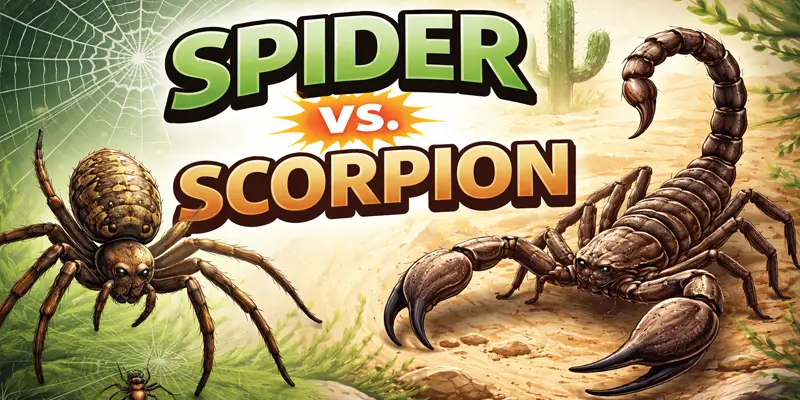
When crossing paths with an eight-legged critter in your home or yard, your instincts may kick in and spur you to walk the other way. Spiders and scorpions often get the same reactions—from initial surprise to worry to wondering just what you’re dealing with. While both are arachnids, spiders and scorpions have distinct physical features and behaviors that can help you determine which one is in front of you.
Today, we’ll explain the differences between these two pests so you can respond correctly in a confrontational situation. Either way, if you have an infestation of spiders or scorpions in your home, it’s wise to call a Phoenix pest control expert for removal.
What Arachnids Have in Common
As arachnids, spiders and scorpions both share the following traits:
- Eight legs
- Two main body segments (a cephalothorax and an abdomen)
- No wings or antennae
- A tendency to hunt smaller insects or other arthropods for food
In dim lighting conditions or when the creature is small, it can be tough to determine which critter sits before you. Here’s how to tell the difference.
Differences in Body Shape and Structure
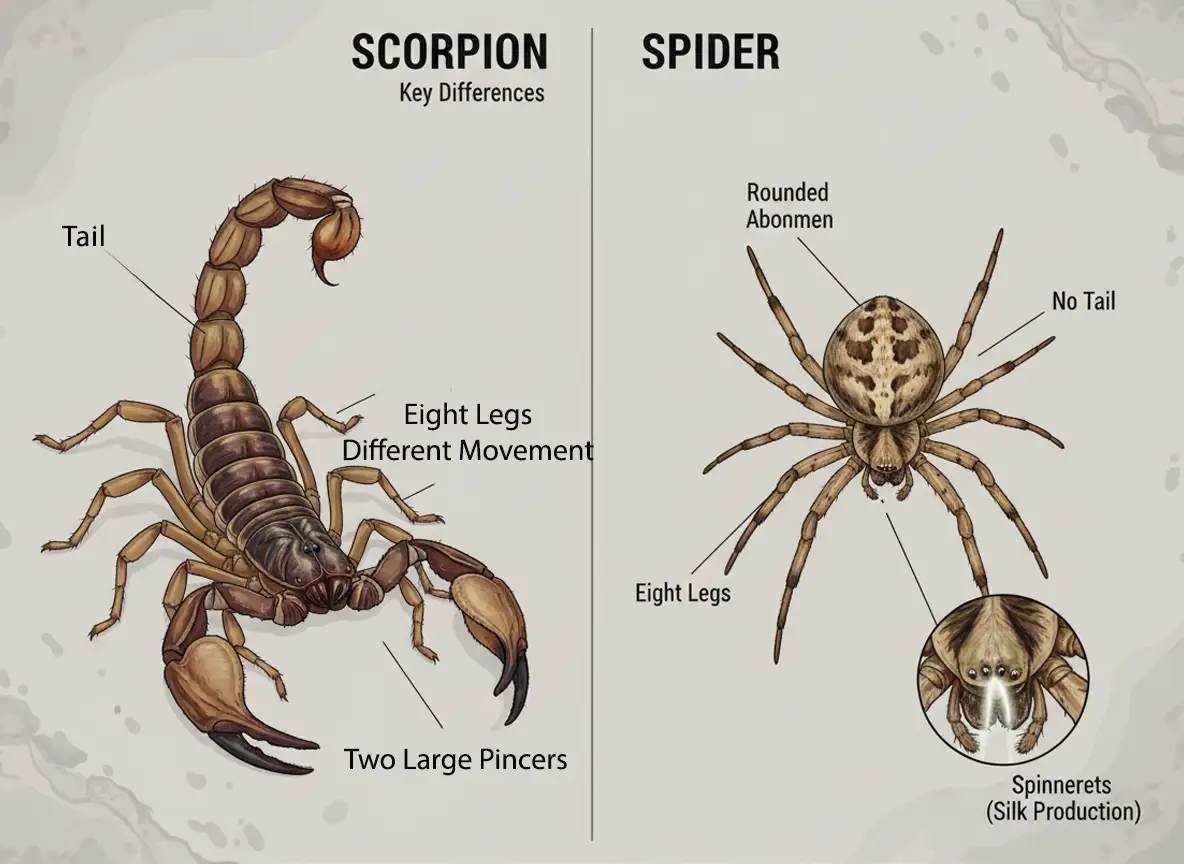
The biggest difference between spiders and scorpions is the presence of a tail and pincers.
- Scorpions have an elongated, segmented abdomen that tapers into a curved tail ending in a venomous stinger.
- Spiders do not have a tail. They have more compact bodies with a rounded abdomen that does not extend into a stinger. They also lack the large, claw-like pincers that scorpions use to catch prey.
Their major anatomical differences include:
- Scorpions: elongated body, segmented tail with stinger, large pincers, and no silk-producing organs.
- Spiders: rounded abdomen, no tail, smaller appendages near the mouth, eight walking legs, and spinnerets for producing silk.
Behavior and Habitat Differences
Spiders are commonly found in basements, attics, garages, and outdoor areas. Many species build webs to trap insects, while others actively hunt without using silk.
Scorpions are nocturnal, meaning they seek shelter during the day under rocks, logs, debris, or in dark crevices. At night, they emerge to hunt insects or other small prey. They prefer warm, dry climates and may enter homes in search of shelter and food.
Fangs vs. Stinger
Both creatures use venom to subdue their prey, but the method of delivery differs.
Most spiders have fangs connected to venom glands located in their mouthparts. Not all spider species are dangerous to humans, but some—such as black widows and brown recluses—can deliver medically significant bites.
Scorpions inject venom through a stinger at the end of their tail. Stings can be extremely painful and, in rare cases, dangerous or even deadly.
Why Accurate Identification Is Important
Correctly identifying whether you’re dealing with a spider or a scorpion helps you know how to respond.
Spiders are generally beneficial predators that help control insect populations. Scorpions are also predators, but due to their stinger and nocturnal behavior, they can pose a greater risk—especially in homes.
Tips for Homeowners
If you’re unsure whether you’ve spotted a spider or a scorpion, consider the following tips:
- Take a clear photo for later reference and to show your Mesa pest control technician.
- Observe behavior from a safe distance—most arachnids will retreat rather than confront you.
- Look for physical traits such as tails, pincers, or webbing.
- Call a pest professional in Phoenix if you suspect scorpions or dangerous spider species.
With a little knowledge and careful observation, you can distinguish a scorpion from a spider and take the right steps to protect your home.
Contact Frontino Pest Co. in Phoenix, AZ
When it comes to scorpions, spiders, and other stinging insects, guessing isn’t worth the risk. Contact Frontino Pest Co. at 602-338-9223 for a professional pest assessment in Phoenix that delivers clarity and peace of mind.
